What Is Managed Farmland? A Plain Guide for Bengaluru Buyers
By Tamara Valley Team8 min read


What Is Managed Farmland? A Plain Guide for Bengaluru Buyers
Sooner or later, someone in your office forwards the message: "Own a farm an hour from Bengaluru. We manage everything." It sounds simple. But what you legally own, what you pay every year, and whether you are even allowed to buy can differ a lot from one project to the next. This guide explains managed farmland in plain words, so you know what to ask before you visit any project, including ours.
Key Takeaways
Managed farmland is agricultural land you buy in your own name, while a company farms, waters and guards it for a yearly fee.
Check whether your sale deed gives you a marked plot or only a share of a bigger piece of land.
There are two costs: the land price (plus registration) and a yearly management fee. Ask what the fee covers, in writing.
Who can buy depends on the state, and on your residency status. Under RBI rules, NRIs and OCIs cannot buy agricultural land.
Be careful with any "farm" offer that promises a fixed return. That is a sign of an investment scheme, not a simple land purchase.
What is managed farmland?
Managed farmland is a farm project where you buy a piece of agricultural land, usually between a quarter acre and one acre, and a farm-management company looks after it for you. The company plants and waters the land, maintains fencing and roads, and provides security. You keep ownership and can usually visit when you like.
The idea exists because many city families want land, fresh air and a weekend place, but don't have the time or skills to farm. The developer or a partner company does the farming. You pay them a yearly fee for that work.
To see how one project works in practice, look at our managed farmland near Bangalore page.
How does managed farmland work?
Buying managed farmland usually follows five steps:
Choose a plot in the project, after a site visit.
Check the documents for that land (title, land records, encumbrance certificate).
Register the sale deed in your name at the Sub-Registrar's office.
Sign a management agreement with the company that will run the farm.
The company runs the farm, and you pay the yearly fee.
Steps 3 and 4 are two separate documents. The sale deed is about ownership. The management agreement is about services and fees. Read both before you pay anything.
You own and decide | The management company does |
The land, in your name | Planting and caring for trees and crops |
Whether to sell, and when | Water supply and irrigation |
Visiting and using your plot | Fencing, roads and common areas |
Renewing or ending the management agreement (check its terms) | Security staff and CCTV |
Reporting to owners |
For a full list of what to check, see our managed farmland due-diligence checklist.

What exactly do you own: a marked plot or a share?
In some projects, the sale deed gives you a separate plot with its own measurements and boundaries. In others, you buy an "undivided share" of a larger survey number, and your "plot" is only a spot on the developer's layout map.
Demarcated (marked) plot | Undivided share | |
What the sale deed says | A specific area with measurements and boundaries | A share or fraction of a bigger land parcel |
Land records | Your name against your own portion (after sub-division) | Your name as one of many co-owners |
Selling later | Easier to show a buyer exactly what they get | Buyer gets a share, which can be harder to sell |
Disputes | Clearer boundaries | Depends on agreement between co-owners |
For example, if a 20-acre survey number is sold to 40 buyers as "half-acre plots" without sub-division, each buyer may legally hold a 1/40 share of the whole 20 acres, not one fenced half acre. Ask the project to show you a sample sale deed and the land records before you decide.
How Tamara Valley registers plots: each plot is individually registered in the buyer's own name at the Sub-Registrar's office, and is marked out on the ground with its own fencing.
What does managed farmland cost?
There are two costs to plan for.
1. The one-time purchase cost
The land price
Stamp duty and registration charges (set by the state)
Any legal fees for document checks
2. The yearly management fee
Paid to the company that runs the farm
Usually covers farming, water, security and upkeep. Ask for the exact list.
Cost | When you pay |
Land price | Once |
Stamp duty and registration | Once, at registration, at the state's rates |
Management fee | Every year |
A good project gives you the fee and what it covers in writing, and explains what happens to the fee if costs rise. At Tamara Valley, our team shares the current price and yearly fee directly when you enquire. Ask for both, and the list of what the fee covers, in writing.
Who can buy managed farmland?
Who can buy depends on two things: the state where the land is, and your residency status.
Karnataka. In 2020 Karnataka removed Sections 79A, 79B and 79C of its Land Reforms Act, which had stopped most non-farmers from buying agricultural land (Khaitan & Co, 2020). That change opened Karnataka farmland to city buyers. The rule is under political debate again. In September 2026, Congress MLA B.R. Patil wrote to Rahul Gandhi urging a repeal of the 2020 changes (The Week, 30 September 2026). If you are buying in Karnataka, check the rule at the time you buy.
Tamil Nadu. Tamil Nadu limits how much agricultural land one family can hold. The ceiling is 15 standard acres for a family of up to five members (Tamil Nadu Land Reforms (Fixation of Ceiling on Land) Act, 1961). A managed farmland plot is far below that. Ask a lawyer to confirm you are eligible to buy before you pay.
NRIs and OCIs. The Reserve Bank of India allows an NRI or OCI to buy "any immovable property (other than agricultural land/ plantation property/ farm house) in India" (RBI Master Direction on Acquisition or Transfer of Immovable Property under FEMA, updated 1 September 2022). Managed farmland is agricultural land, so NRIs and OCIs cannot buy it. Inheritance is treated differently. If you live abroad, speak to a lawyer before you pay anything.
Is managed farmland safe? Red flags to watch
Buying registered land in your own name is very different from "investing" in a farm scheme that promises fixed returns. Regulators have acted against the second kind.
In January 2024, the Securities and Exchange Board of India (SEBI) passed an interim order directing Growpital, an agri-investment platform, to stop collecting money from the public. The order describes plans offering assured returns of 11 to 14%, and says over ₹184 crore had been mobilised as of 31 December 2023. It also notes that an investor who invested through the platform became a partner in a limited liability partnership (LLP), not the owner of a registered plot (SEBI interim order, Growpital Platform, 29 January 2024).
Watch for these red flags in any project:
A promised or "assured" yearly return. Land prices and farm income are not guaranteed.
No sale deed in your name, only a certificate, partnership or "membership".
Vague fee terms, or a fee that can change without notice.
Missing documents: no land records or encumbrance certificate you can check yourself.
Pressure to pay fast before you have seen the land or the papers.
"NRIs welcome" on farmland, which goes against RBI rules.
Before you sign anything, read our guide to managed farmland risks, fees and red flags.
Who is managed farmland right for, and who is it not for?
Managed farmland can suit you if:
You want land and a weekend place within driving distance of Bengaluru.
You are thinking in years, not months.
You are happy for someone else to do the farming.
It is probably not right if:
You need a quick or guaranteed return.
You may need the money back soon. Selling farmland depends on finding a buyer.
You are an NRI or OCI (see above).
If you are weighing it as an investment, read our plain guide on whether farmland is a good investment in India, and about tax on agricultural land.
Managed farmland on the Tamil Nadu side: Tamara Valley in brief
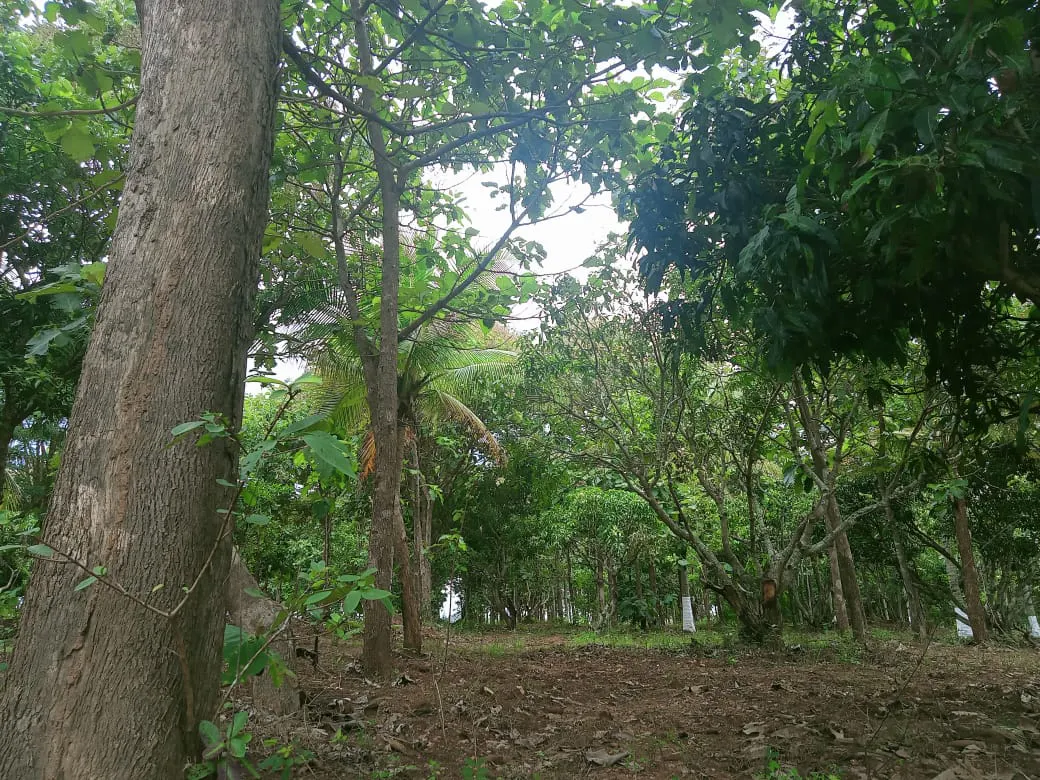
Tamara Valley is a managed farmland community at Devarbetta, Thalli, near Hosur in Tamil Nadu, about 30 km from Electronic City via NH-44, the Bengaluru–Chennai highway. The project covers more than 300 acres and offers plots of 0.25, 0.5 and 1 acre. It is developed by Rajan Farms (previously known as Koino Farms). A farm management team looks after the farming, and the site has 24/7 security staff and CCTV. You can read how we manage water through the year.
The best way to judge any managed farmland is to walk the land and read the papers yourself. Book a free site visit (link below) and we will show you the plots, the documents and the farm as it is today.
The short version
Managed farmland means you own the land and a company runs the farm for a yearly fee.
Check whether you get a marked plot or a share, and get the fee terms in writing.
Check the law for your state and your residency status, and walk away from promised returns.
Want to see what this looks like on the ground? Book a free site visit to Tamara Valley, or start with our due-diligence checklist (linked above).
This article is general information, not legal, tax or investment advice. Rules change; check with a qualified lawyer before buying agricultural land.